
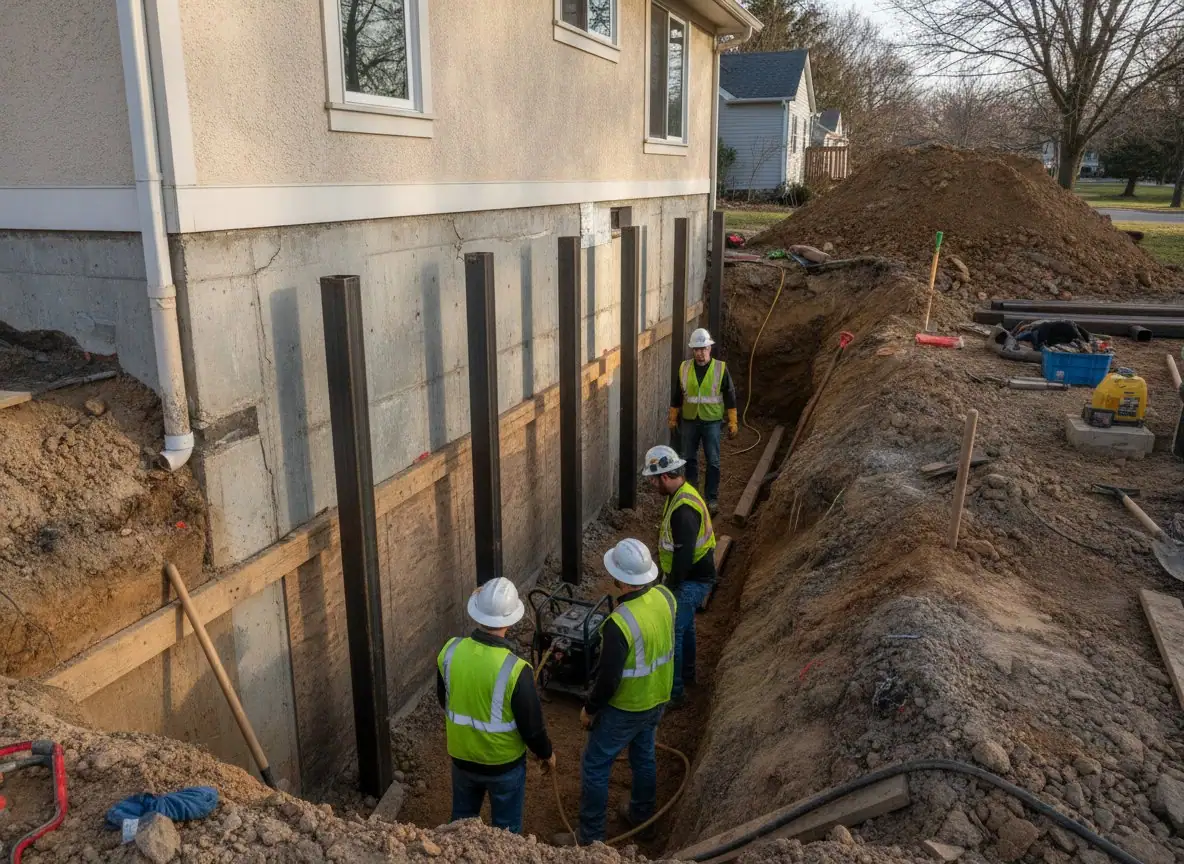
Foundation Crack Repair Cost in Austin, TX
Foundation crack repair cost in Austin depends on what the crack is telling you. A dry, hairline shrinkage crack in a slab is a small sealing job. A widening crack that signals settlement on expansive clay can lead to piers and structural work. This page explains the general price ranges you will see quoted online, what moves a job up or down that scale, and how to get an exact written number for your home.
Hydepark Foundation Repair handles foundation crack repair in Austin and nearby communities, including Hyde Park, Allandale, Zilker, West Lake Hills, Pflugerville and Buda. We do not quote prices sight unseen. We give a written quote after a free inspection, because two cracks that look alike in a photo can need very different repairs.
How much does foundation crack repair cost in Austin?
General published figures put minor foundation crack repair in Austin at roughly $300 to $1,500. Broader structural repair or slab leveling usually starts around $4,500 to $12,000 and can go higher. These are general market ranges, not Hydepark quotes.
General cost ranges (industry figures, not Hydepark pricing)
- Minor crack sealing or injection: about $300 to $1,500, often priced per crack or per linear foot
- Slabjacking or mudjacking to lift a settled section: about $600 to $3,000
- Piers, when cracks signal settling: about $1,000 to $4,000 per pier
- Major structural work: about $10,000 to $40,000 or more
- Typical broader structural repair or slab leveling: about $4,500 to $12,000 or more
The wide spread comes from one question: is the crack cosmetic, or is it a symptom of a moving foundation? Austin's expansive clay swells after rain and shrinks hard during drought. That cycle cracks slabs and lifts or drops sections of a house. Your cost depends on several things:
Read moreShow less
- Whether the crack is still moving or has stabilized
- Your neighborhood's geology. Deep clay is common in East and Central Austin, while West Austin lots are often rocky or sloped.
- How deep piers must go and what equipment the site allows
For the full picture beyond cracks, see our guide to foundation repair cost in Austin. Before cost makes sense, though, you need to know whether your crack is the kind that matters.
What does a concerning foundation crack look like?
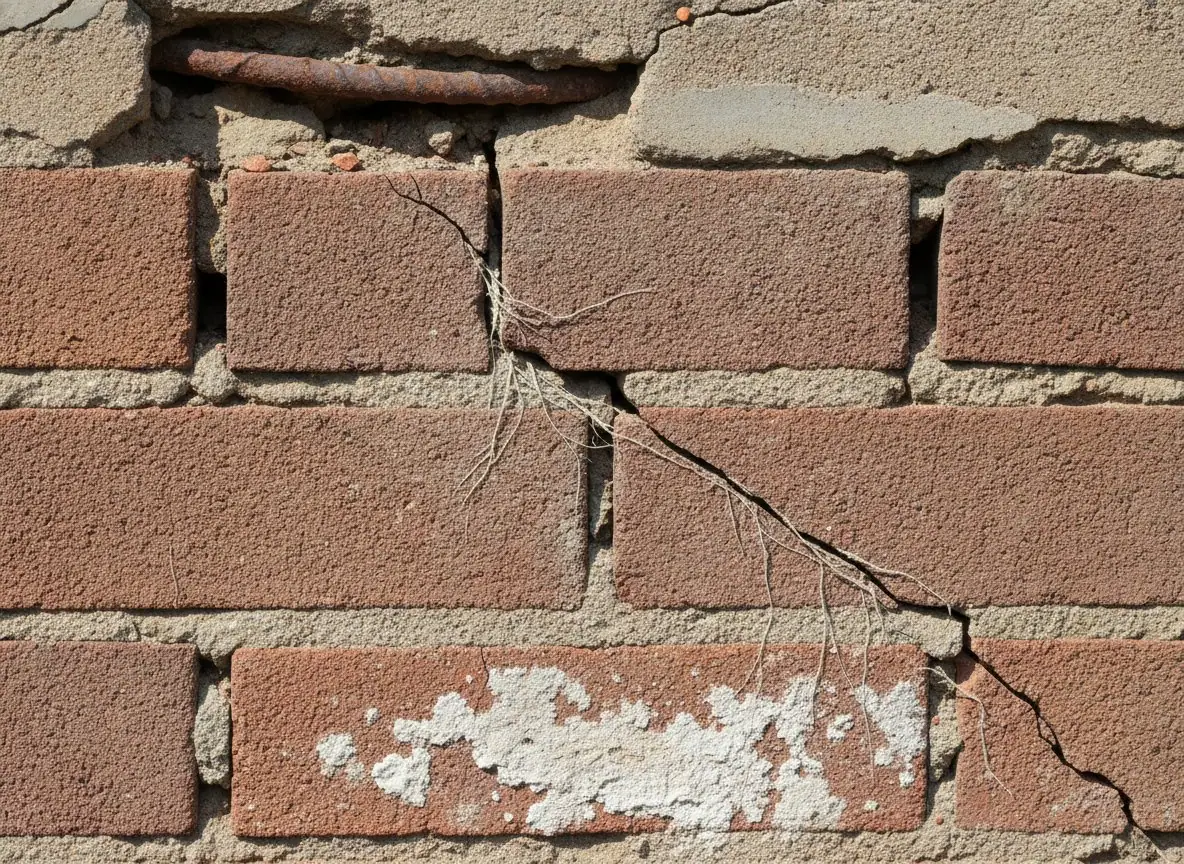
A concerning foundation crack is one that is wider than a hairline, uneven from one side to the other, running horizontally or in a stair-step pattern, or getting bigger over time. Thin vertical cracks that stay the same width are usually shrinkage from concrete curing.
Signs that point to structural movement rather than cosmetic shrinkage:
- One side of the crack sits higher than the other (vertical displacement)
- The crack is wider at the top than the bottom, or the reverse
- Horizontal cracks in stem walls or bowing walls, which can mean soil pressure
- Stair-step cracks in brick veneer following the mortar joints
- Diagonal cracks at the corners of doors and windows inside the house
- Doors and windows that stick, sloping floors or gaps at baseboards showing up at the same time
- Moisture, efflorescence or soil coming through the crack
Our page on types and causes of foundation cracks goes into each pattern in more detail. Pattern is half the story. Width and change over time are the other half.
Free, no-obligation estimates
Talk to Hydepark Foundation Repair
Tell us what you need and we’ll take it from there.
At a glance
How big of a foundation crack is serious?
As a general rule, a crack wider than about 1/4 inch, or any crack with one side offset from the other, deserves a professional inspection. So does any crack that keeps widening, even a narrow one.
| Crack width / behavior | Typical meaning | Usual next step |
|---|---|---|
| Hairline (under 1/16 in.), stable | Concrete shrinkage, usually cosmetic | Monitor; seal if it lets in moisture |
| 1/16 to 1/8 in., stable | Minor movement or shrinkage | Seal or inject; mark ends and recheck |
| 1/8 to 1/4 in. | Possible ongoing soil movement | Inspection to check elevations and cause |
| Over 1/4 in., or offset | Likely settlement or heave | Structural evaluation; repair may need piers |
| Any width, growing or horizontal | Active movement or lateral pressure | Prompt inspection before sealing |
A simple way to track change: pencil a line across each end of the crack and write the date. Measure the width with a ruler or a credit card edge every few weeks, especially after a dry spell or heavy rain. Once you know the crack's size and behavior, you can see why the next factors swing the price so much.
At a glance
What affects foundation crack repair cost: vertical vs horizontal cracks, length and access?
Direction, length, access and soil are the four biggest drivers of foundation crack repair cost. Horizontal cracks and long or hard-to-reach cracks generally cost more than short vertical ones you can reach easily.
| Factor | Lower-cost situation | Higher-cost situation |
|---|---|---|
| Direction | Vertical shrinkage crack, stable | Horizontal or stair-step crack tied to soil pressure or settlement |
| Length and width | Short, narrow, single crack | Long, wide or multiple cracks; priced by linear foot |
| Access | Exposed slab edge, open garage floor | Under finished flooring, cabinets or tile; tight crawl space; landscaping or flatwork to remove |
| Movement | Crack has stopped moving | Active movement needing stabilization before sealing |
| Soil and geology | Rocky West Austin lot with shallow bearing | Deep expansive clay in East or Central Austin needing deeper piers |
| Site and equipment | Level yard, easy equipment access | Sloped lot, limited access, hand digging |
| Related damage | Crack only | Plumbing leaks, drainage correction, floor or drywall restoration |
| Permits and engineering | Cosmetic sealing | Structural work that calls for engineering documents or a permit |
Vertical cracks are the most common and often the least expensive to fix. Horizontal cracks are rarer in Austin slab homes. When they appear in stem walls, retaining-style walls or pier-and-beam perimeter beams, they often point to lateral pressure, and the wall may need reinforcement, not just filler. Those differences show up most clearly when you compare repair methods side by side.
At a glance
What does crack repair cost by repair type?
Repair type sets the general cost tier. Sealing and injection sit at the low end, lifting and piering in the middle, and full structural repair at the top. The figures below are general published ranges, not Hydepark quotes.
| Repair type | What it does | When it fits | General range |
|---|---|---|---|
| Surface sealing / foundation patching | Fills and seals the crack surface with polymer or cementitious patch | Stable hairline to small cracks; cosmetic or moisture control | Part of the $300–$1,500 minor-repair range |
| Epoxy injection | Bonds the concrete back together structurally | Stable cracks where strength matters | About $300–$1,500, per crack or per linear foot |
| Polyurethane injection | Flexible, expanding seal that stops water | Leaking cracks with minor movement | About $300–$1,500, per crack or per linear foot |
| Slabjacking / mudjacking | Pumps material under a settled slab section to lift it | Sunken flatwork or slab sections | About $600–$3,000 |
| Piers | Transfers the load to deeper, stable soil or rock | Cracks caused by settlement | About $1,000–$4,000 per pier |
| Major structural foundation repair | Stabilizes, levels and restores the foundation | Widespread movement, multiple systems involved | About $10,000–$40,000+ |
Pier count drives most larger bills. A house needing six piers costs far more than one needing two. Clay depth sets how far each pier goes. If the house is on pier and beam, shimming and beam work may replace slab piers. Where a crack sits also decides whether it can be worked from inside the home.
Can you fix a cracked foundation from the inside?
Yes. Many slab and wall cracks can be sealed or injected from the inside, especially stable cracks you can reach in a garage, under removed flooring or inside a crawl space. Interior work does not fix the cause if the soil is still moving.
Typical interior process:
- Expose the crack. This can mean pulling carpet, tile or baseboard.
- Clean out debris and dust, and dry the crack if it is damp.
- Set injection ports along the crack and seal the surface between them.
- Inject epoxy or polyurethane from the lowest port upward until material shows at the next port.
- Let it cure, remove the ports, then grind smooth and restore the finish.
Some interior slab repairs require cutting into the slab or drilling for interior piers, which adds flooring removal and restoration cost. Whether inside is the right side is a separate question.
At a glance
Is it better to repair foundation cracks from inside or outside?
For a stable, dry crack, inside repair is usually simpler and costs less. For leaking cracks, cracks driven by drainage, or settlement that needs piers at the perimeter, outside repair is often better because it deals with water and soil at the source.
| Consideration | Inside repair | Outside repair |
|---|---|---|
| Best for | Stable cracks, cosmetic or structural bonding | Water entry, perimeter settlement, drainage-related movement |
| Disruption | Flooring, cabinets or furniture may be moved | Excavation, landscaping and flatwork may be disturbed |
| Addresses cause | Rarely; seals the symptom | Often, through piers, drainage correction or waterproofing |
| Relative cost | Generally lower | Generally higher due to digging and restoration |
| Weather sensitivity | Low | Higher; wet clay slows excavation |
Many jobs combine both. Exterior piers stabilize the slab, then interior cracks are injected and finishes restored. Choosing correctly depends on knowing whether the crack is structural, which raises the question of an engineer.
Do you need a structural engineer before repairing a crack?
Not always. A stable hairline crack rarely needs one. An independent structural engineer evaluation, generally around $500 to $800, is worth it when a crack is wide, offset or growing, or when you are buying or selling a home. It also helps when you want an unbiased opinion on whether a crack is cosmetic or structural.
An engineer typically:
- Takes floor elevation readings to map high and low points
- Reviews crack patterns, drainage, trees and plumbing history
- States whether movement is structural and recommends a repair approach
- May provide documents needed for permits or a home sale
Our free foundation inspection is a good first step. It shows whether you likely need an engineer or just a sealing repair. Once you know the cause, the next practical question is who pays.
Will homeowners insurance cover a cracked foundation?
Usually not for cracks from settlement, soil shrinkage or normal wear, which most policies exclude. Coverage may apply when a crack results from a sudden covered event, such as a plumbing leak that washes out soil under the slab, depending on your policy.
Points to check with your insurer:
- Whether "earth movement" and "settling" exclusions apply
- Whether sudden water damage, such as slab leaks, is covered and to what extent
- Coverage for tearing out and restoring flooring to reach a leak
- Deadlines for reporting damage once discovered
Hydepark Foundation Repair helps homeowners with insurance claims by documenting the damage and the likely cause from our inspection. Whatever your coverage, a firm number starts with seeing the crack in person.
How do you get an exact crack repair quote in Austin?
Schedule a free inspection. We look at the crack and the rest of the foundation, then give you a written quote for the repair your home actually needs.
- Call or book online. Tell us where the crack is and when you noticed it. Photos with a ruler for scale help.
- On-site inspection. We check crack width, direction and offset, look for related signs such as uneven floors, and review drainage and access.
- Diagnosis. We explain whether the crack looks cosmetic or structural and what is likely causing it.
- Written quote. You get the repair method, scope and price in writing.
- Financing options. Financing is available if you need to spread out the cost.
Free inspection and financing: Call Hydepark Foundation Repair at (512) 782-0688. We offer free inspections and estimates, financing, help with insurance claims, and 24/7 emergency service for homes and commercial properties across Austin, Buda, Pflugerville, Sunset Valley, Rollingwood and West Lake Hills. You can also reach us through our contact page.
FAQ
Frequently asked questions
How much does horizontal foundation crack repair cost?
Horizontal cracks usually cost more than vertical ones because they often signal lateral soil pressure or settlement. Sealing alone may not hold, and the wall or beam may need reinforcement or piers. The cost depends on length, wall type, access and whether the soil is still pushing. We confirm the scope during a free inspection.
How much does vertical foundation crack repair cost?
A stable vertical crack is often among the least expensive repairs. It typically falls within the general $300 to $1,500 minor-repair range for sealing or injection. If the vertical crack is offset or widening, the cause may need stabilization first, which raises the cost.
Is crack injection priced per crack or per foot?
Both methods are common. Short cracks are often priced per crack. Long cracks are usually priced by the linear foot, with setup, access and restoration added. Your written quote will show how the price was figured.
Does a hairline crack need repair?
A stable hairline shrinkage crack usually does not need structural repair. You may still want to seal it to keep out moisture and pests. Mark it, measure it over a few months, and have it inspected if it widens, offsets or appears alongside sticking doors or sloping floors.
Can crack repair cost increase if the foundation is still moving?
Yes. Sealing a crack on a moving foundation often fails, and the crack reopens. If movement is active, the repair usually needs to stabilize the foundation first with piers, drainage correction or leak repair. That adds to the cost but keeps the crack repair from being wasted.
For a clear answer on your crack and a written quote, call Hydepark Foundation Repair at (512) 782-0688 to schedule your free inspection.
Why choose us
Why choose Hydepark Foundation Repair?
Free estimates
Get a clear, no-obligation estimate before any work begins.
Licensed & insured
Your property and our crew are protected on every project.
Residential & commercial
One team for homes, multi-family and commercial properties.
Locally owned & operated
A local team serving your community and the surrounding area.
Get in touch
Find foundation repair help near you
Request a free estimate online or give us a call — our team will follow up quickly.
- Call us(512) 782-0688
- Visit3800 N Lamar Blvd suite 200 02, Austin, TX 78756
- HoursMon-Sun: 07:00 – 19:00